
Thomas Wright Bronze Sundial, 1727-1750, on a Later Portland Stone Base
Thomas Wright Bronze Sundial, 1727-1750, on a Later Portland Stone Base
7754
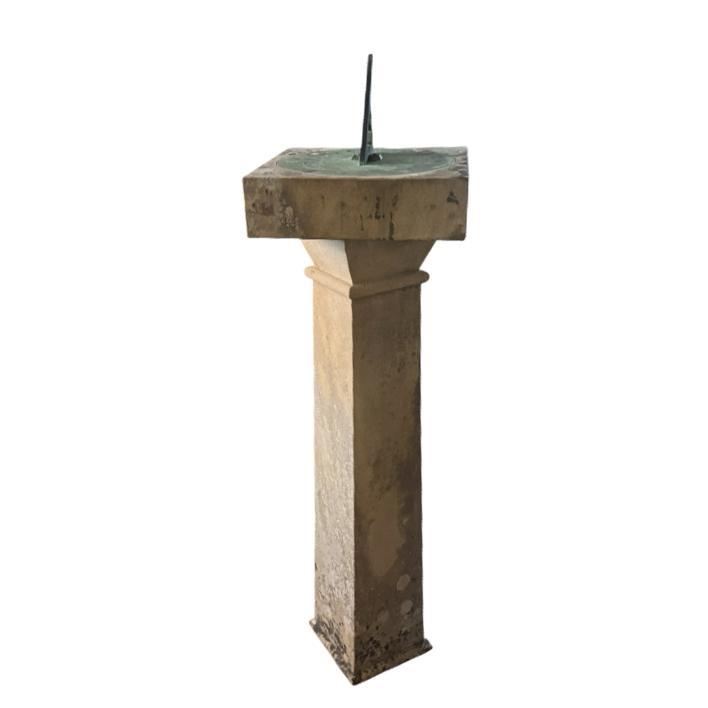
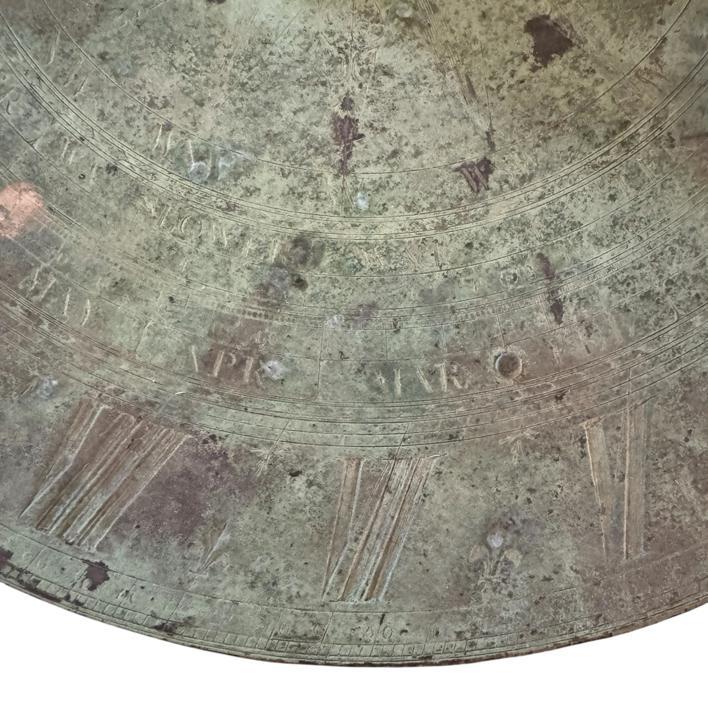
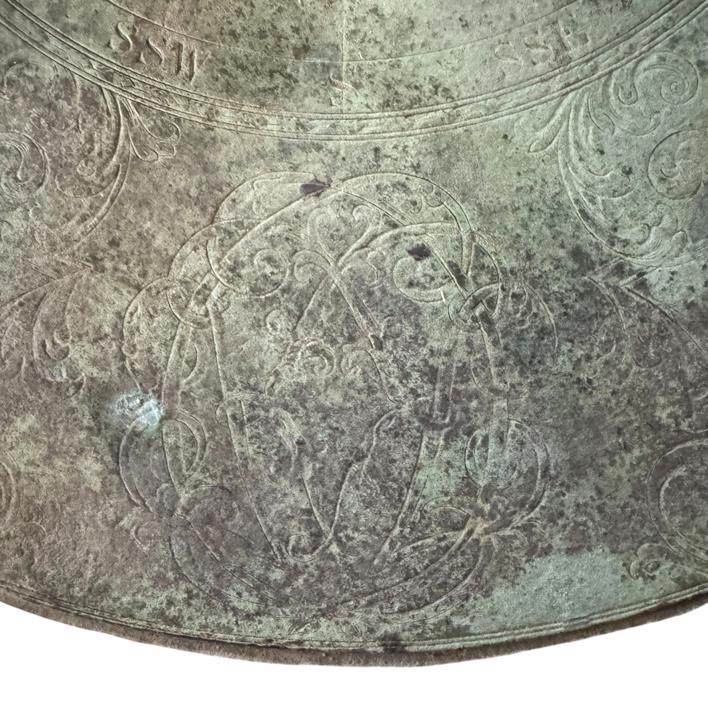
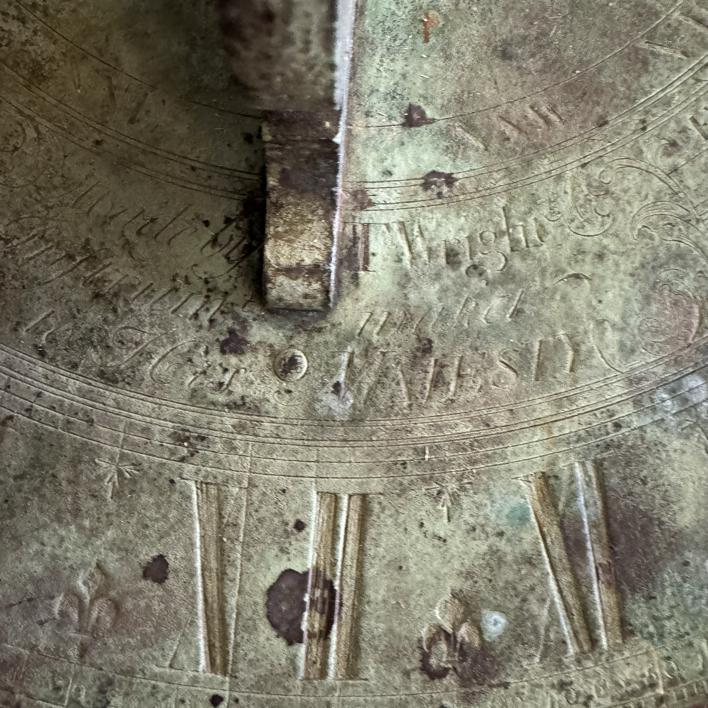
A finely cast and engraved bronze sundial by Thomas Wright (1711-1786), the distinguished 18th-century mathematical instrument maker associated with the court of George II. Dating from between 1727 and 1750, this evocative Georgian survival combines the disciplined precision of a scientific instrument with the enduring visual appeal of a classical garden ornament.
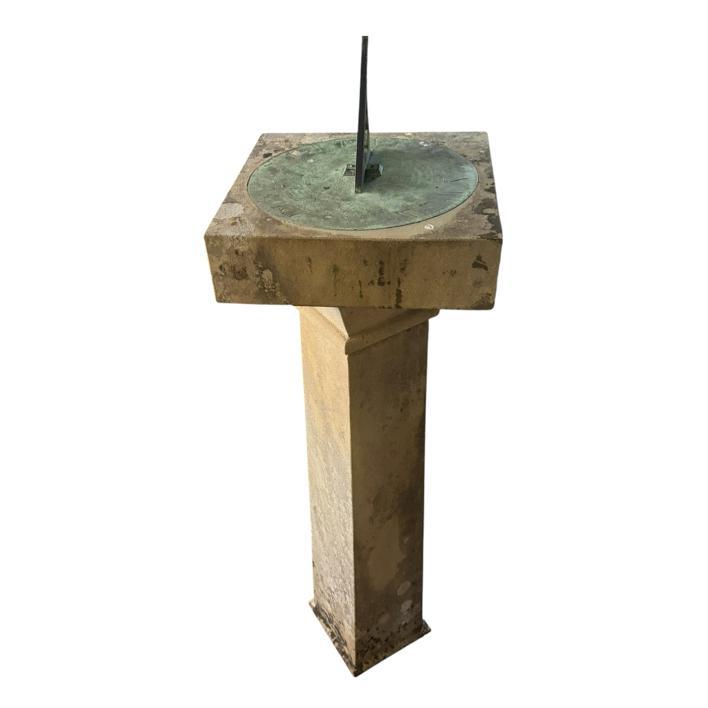
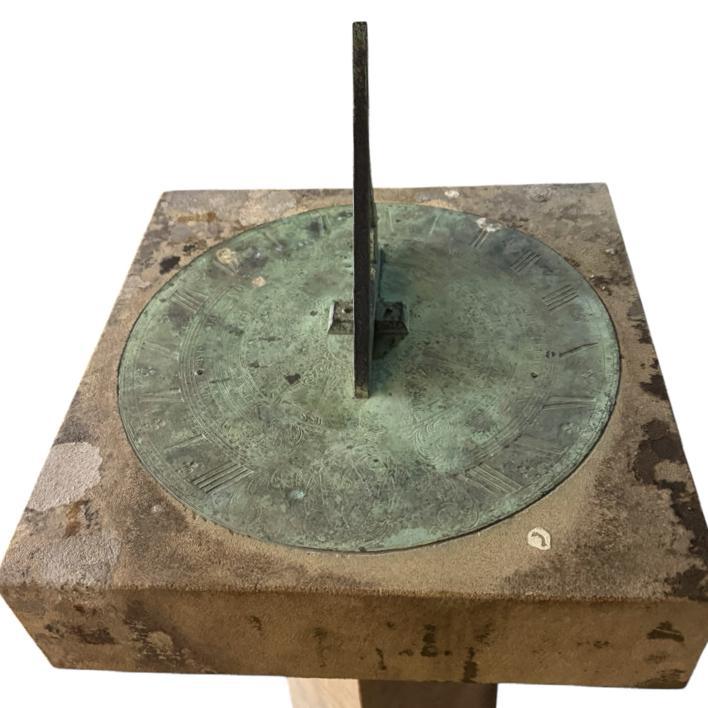
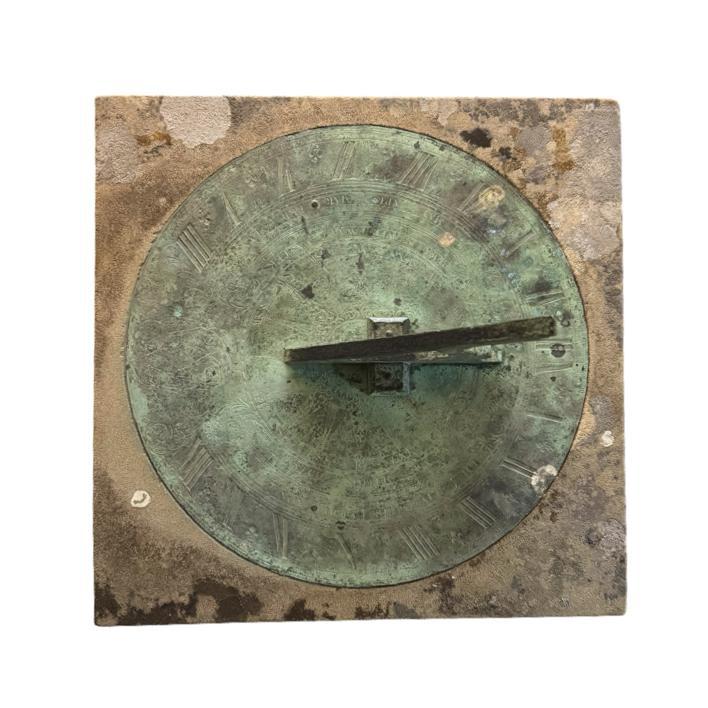
The circular bronze dial is engraved with hour divisions and centred by a shaped gnomon, or shadow-casting pointer, designed to register the changing position of the sun across the day. Its carefully worked surface reflects a period in which sundials were valued not only as practical timekeepers, but also as objects of learning, taste, and status. Placed within the grounds of a country house or formal garden, a dial of this quality would have expressed its owner's engagement with astronomy, mathematics, and the ordered ideals of the classical landscape.
Thomas Wright's name lends particular interest to the piece. Active during a great age of British mathematical instrument making, Wright produced instruments at a time when craftsmanship, scientific enquiry, and patronage were closely intertwined. His association with George II adds a further layer of historical resonance, placing this dial within the world of Georgian courtly and intellectual life.
The warm, weathered bronze is now presented on a later Portland stone base. The pale limestone provides a handsome architectural counterpoint to the aged metal, while the substantial base gives the sundial a strong and well-balanced presence. Together, the two elements create an object that is both scholarly and sculptural.
Equally effective in a formal garden, courtyard, parterre, or beside a reflecting pool, the sundial would make a compelling focal point when positioned along an axial path or within a carefully designed landscape. It would also bring a sense of history and gravitas to an orangery, conservatory, entrance hall, or library, where the engraved dial and finely cast gnomon can be appreciated as much for their craftsmanship as for their original purpose.
A rare and characterful example of Georgian scientific design, offering a tangible connection to the craftsmanship, curiosity, and cultivated taste of 18th-century Britain.
Dimensions:
RELATED ITEMS






, the distinguished 18th-century mathematical instrument maker associated with the court of George II. Dating from between 1727 and 1750, this evocative Georgian survival combines the disciplined precision of a scientific instrument with the enduring visual appeal of a classical garden ornament.The circular bronze dial is engraved with hour divisions and centred by a shaped gnomon, or shadow-casting pointer, designed to register the changing position of the sun across the day. Its carefully worked surface reflects a period in which sundials were valued not only as practical timekeepers, but also as objects of learning, taste, and status. Placed within the grounds of a country house or formal garden, a dial of this quality would have expressed its owner's engagement with astronomy, mathematics, and the ordered ideals of the classical landscape.Thomas Wright's name lends particular interest to the piece. Active during a great age of British mathematical instrument making, Wright produced instruments at a time when craftsmanship, scientific enquiry, and patronage were closely intertwined. His association with George II adds a further layer of historical resonance, placing this dial within the world of Georgian courtly and intellectual life.The warm, weathered bronze is now presented on a later Portland stone base. The pale limestone provides a handsome architectural counterpoint to the aged metal, while the substantial base gives the sundial a strong and well-balanced presence. Together, the two elements create an object that is both scholarly and sculptural.Equally effective in a formal garden, courtyard, parterre, or beside a reflecting pool, the sundial would make a compelling focal point when positioned along an axial path or within a carefully designed landscape. It would also bring a sense of history and gravitas to an orangery, conservatory, entrance hall, or library, where the engraved dial and finely cast gnomon can be appreciated as much for their craftsmanship as for their original purpose.A rare and characterful example of Georgian scientific design, offering a tangible connection to the craftsmanship, curiosity, and cultivated taste of 18th-century Britain.)